
Files
Download Full Text (975 KB)
Description
Foreword
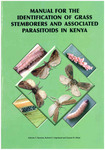
This manual illustrates many of the stemborers and associated insects of grasses in Kenya, and provides keys for their identification. It can be used together with icipe’s booklet A Primer on Grass Identification and Their Uses in Kenya, which provides diagnostic and pictorial information on grass species that abound in and around agricultural lands in Kenya.
It is of paramount importance to identify stemborers and their natural enemies associated with grasses to implement ways of using native grasses to manage insect pests in farmers’ fields. Wild grasses may act to repel or physically block pests of cereal crops, limiting access to crop plants. Grasses may also serve as a preferred habitat for beneficial insects and spiders that parasitise or prey on pest species. Proper management of wild grasses around crop fields can provide a natural resource of beneficial species of parasitoids and predators, increasing the chances of self-sustainable agriculture development among resource-poor farmers throughout Kenya. In this manual, the focus is on the pests and their parasitoids. As the technologies for self-regulatory pest management and sustainable agriculture grow more sophisticated and specific, correct identification of pest insects and their enemies is very important. However, there is presently no single manual available that offers users a tool to identify insects to at least the generic level. This manual addresses that need.
The primary target users of this manual are field or laboratory technicians and researchers. Technical language has been minimised as far as possible. However, many species of stemborers on grasses look similar, and identification based solely on external morphological features can be frustratingly difficult. This is particularly true for moth species of the genera Chilo, Sesamia and Busseola, especially when adult specimens are rubbed. Therefore, photographic images of the genitalia of most stem-boring moths have been included to provide help in identification to the species level. The illustrations and photos should facilitate the identification of stemborers and their associated insects reared from tall grasses. These data will help to determine the grass species that are important for conservation and maintenance of insect biodiversity.
I hope the manual will be a useful tool in identifying the stemborers on grasses and their natural enemies associated with the wild and cultivated grasses of Kenya, and that it also provides information useful for supporting self-regulatory pest management for sustainable agriculture and the conservation of biological diversity.
C. Borgemeister Director General, icipe – African Insect Science for Food and Health
ISBN
92 9064 189 4
Publication Date
2007
Publisher
ICIPE Science Press, International Centre of Insect Physiology and Ecology (icipe)
City
Nairobi, Kenya
Recommended Citation
Barrion, A. T., Copeland, R. S., & Khan, Z. R. (2007). Manual for the Identification of Grass Stemborers and Associated Parasitoids in Kenya. Retrieved from https://thehive.icipe.org/manuals/20