
Files
Download Full Text (19.9 MB)
Description
Introduction
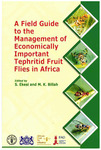
Fruit and vegetable production is one of the fastest-growing agricultural sectors in Africa, providing both income and employment to growers and exporters alike. The range of fruits and vegetables grown is diverse. Mangoes, citrus, apple, papaya, passion, guava, avocado, cucumber, pumpkin and watermelon are among the most common fruits and vegetables grown for domestic urban markets and for export to major outlets in Europe and the Middle East. This growth is changing the dietary patterns leading to increased consumption of fruits and vegetables. However, different types of insect pests afflict production in Africa, and perhaps none have gained greater notoriety than the fruit flies (Diptera: Tephritidae). The enormous losses they cause through direct damage to fruits and vegetables and loss of market opportunities through imposition of strict quarantine regulations by importing countries to prevent entry and establishment of fruit flies demand urgent need for implementation of sustainable management practices for fruit flies control. The introduction of uniform and strict quarantine restrictions and the maximum residue level (MRL) regulations in the European Union compound the existing fruit fly problem and jeopardise the lucrative export of fresh fruits and vegetables from Africa. Lack of local expertise in fruit fly management makes it difficult to respond in a timely and efficient manner to the challenges imposed by fruit flies. The correct identification of fruit flies occurring in a particular area and their damage symptoms is a first step towards developing appropriate management strategies.
ISBN
92 9064 179 7
Publication Date
2006
Publisher
ICIPE Science Press, International Centre of Insect Physiology and Ecology (icipe)
City
Nairobi, Kenya
Recommended Citation
Ekesi, S., & Billah, M. K. (2006). A Field Guide to the Management of Economically Important Tephritid Fruit Flies in Africa. Retrieved from https://thehive.icipe.org/manuals/17