Files
Download Full Text (20.9 MB)
Description
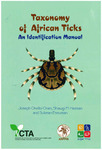
Pests and vectors are major constraints to the improvement of crop and livestock productivity and health conditions of man in Africa. Research on pests and vectors have been top priority areas at the International Centre of Insect Physiology and Ecology (ICIPE), being addressed under different research programmes, including the Ticks Research Programme.
Ticks are reported to surpass all other arthropods in the number and variety of diseases they transmit to animals and man. There are about 170 species of soft ticks (Argasidae) and 700 species of hard ticks (Ixodidae), the majority of which are found in Africa. Several of these are known to transmit pathogenic organisms such as protozoa, rickettsia, viruses and bacteria to animals and man. The host and disease relationships of ticks and their distribution have been changing due to global changes in climatic conditions, human population pressure on vegetation, unrestricted movement of host animals and associations between domestic and wild animals. These trends underscore the need for accurate tick identification to continuously re-assess the relationships between host, vector and pathogens.
Publication Date
1999
Publisher
International Centre of Insect Physiology and Ecology (icipe)
Recommended Citation
Okello-Onen, J., Hassan, S. M., & Essuman, S. (1999). Taxonomy of African Ticks: An Identification Manual. Retrieved from https://thehive.icipe.org/manuals/7