Files
Download Full Text (809 KB)
Publication Date (Issue Year)
2026
Language
English
Country
Ghana
Abstract
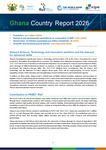
Ghana's development agenda puts science, technology and innovation (STI) at the centre of its plans for a more productive, diversified, knowledge-driven economy. The Medium-Term National Development Policy Framework 2026–2029 names two constraints on industrial development: low investment in research and development (R&D), and a shortage of skilled industrial personnel. In response, it calls for greater use of applied research, more R&D investment and industry-relevant skills. The 2026–2029 Medium-Term Development Plan for science and technology and the National STI Policy support these goals. They call for mainstreaming STI across sectors, expanding tertiary STEM education and strengthening research infrastructure and institutional capacity.
Ghana is one of nine African countries contributing to PASET Rsif. Since 2019, Ghana has committed USD 2 million to train Ghanaian PhD scholars and currently serves as Vice Chair of PASET. Its contribution goes into a pooled African fund that develops highly skilled scientists and draws on wider research and international partnerships. Ghana also hosts an Rsif African Host University-The University of Ghana through its School of Agriculture's PhD programme in Applied Agricultural and Policy/Agribusiness. It trains scholars from Ghana and across Africa and takes part in research and innovation grants and international partnerships. This helps position Ghana as both an investor in advanced scientific training and a regional hub for research and innovation.