Files
Download Full Text (13.6 MB)
Publication Date (Issue Year)
9-2025
Language
English
Country
Tanzania
Abstract
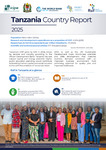
Tanzania’s GDP grew by 5.6% in 2024, driven by services and industry according to the African Development Bank. Tanzania has vast natural capital and energy potential. Higher public education spending would contribute to boosting human capital and social inclusion in line with the ambition of Tanzania’s Vision 2050 as well as the UN Sustainable Development Goals. World-class scientists and skills development that matches business demand combined with an improved business environment hold promising potential for quality jobs and improved livelihoods. Tanzania is one of eleven African countries that are active in the Partnership for skills in Applied Sciences, Engineering and Technology (PASET), and has expressed its intention to contribute to the Regional Scholarship and Innovation Fund (Rsif), which is PASET’s flagship initiative. Rsif provides benefits to Tanzania by supporting the building of strong institutions and training the future leaders in the applied sciences, engineering, and technology to drive a science and knowledge-led agenda. Sokoine University of Agriculture and Nelson Mandela African Institution of Science and Technology are Rsif African Host Universities. There are 64 Rsif PhD students in Tanzania (19 nationalities, 36% women). 12 Tanzanians were awarded Rsif PhD scholarship (67% women). There are 145 research publications as of 30 June 2025 and 10 research and innovation projects under implementation in Tanzania. The report turns the spotlight on Tanzania’s Rsif scholars, highlighting innovative research that boosts ozone protection and climate resilience, and a Tanzanian Rsif alumna who won international recognition through the UNESCO-L’Oréal for Women in Science Award.