-
Rsif Kenya Country Report 2023
Regional Scholarship and Innovation Fund (Rsif)
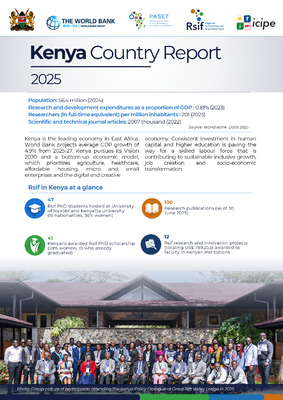
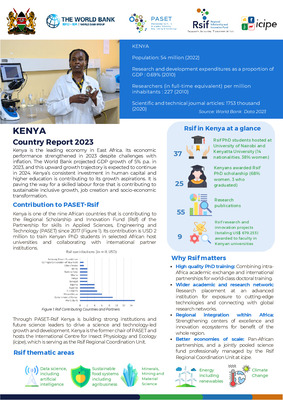
Kenya is the leading economy in East Africa. Its economic performance strengthened in 2023 despite challenges with inflation. The World Bank projected GDP growth of 5% p.a. in 2023, and this upward growth trajectory is expected to continue in 2024. Kenya’s consistent investment in human capital and higher education is contributing to its growth aspirations. It is paving the way for a skilled labour force that is contributing to sustainable inclusive growth, job creation and socio-economic transformation. Kenya is one of the nine African countries that is contributing to the Regional Scholarship and Innovation Fund (Rsif) of the Partnership for skills in Applied Sciences, Engineering and Technology (PASET) since 2017. Its contribution is USD 2 million to train Kenyan PhD students in selected African host universities and collaborating with international partner institutions. Through PASET-Rsif Kenya will build strong institutions and future science leaders to drive a science and technology-led growth and development. Kenya is the former chair of PASET and hosts the International Centre for Insect Physiology and Ecology (icipe), the Rsif Regional Coordination Unit. University of Nairobi and Kenyatta University are among the 15 Rsif African Host Universities. There are 37 Rsif PhD students hosted in Kenya (14 nationalities, 38% women) and 9 Rsif research and innovation projects awarded to Kenyan institutions. 25 Kenyan nationals have been awarded Rsif scholarship (68% women) and there are 55 research publications by the Rsif students. The report turns the spotlight on Kenyan Rsif scholars and highlights how an Rsif research project is unlocking a market for seaweed and banana fibre while addressing period poverty and pollution.
-
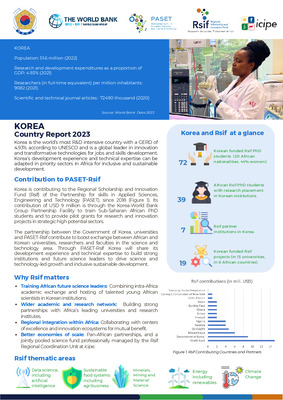
Rsif Korea Country Report 2023
Regional Scholarship and Innovation Fund (Rsif)
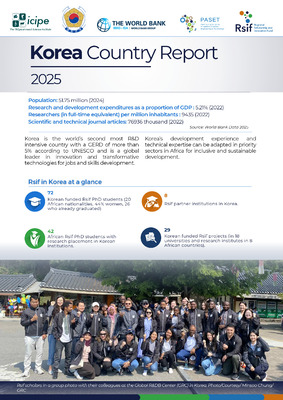
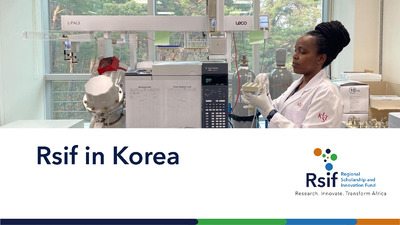
Korea is the world’s most R&D intensive country with a GERD of 4.93% according to UNESCO and is a global leader in innovation and transformative technologies for jobs and skills development. Korea’s development experience and technical expertise can be adapted in priority sectors in Africa for inclusive and sustainable development. Korea is contributing to the Regional Scholarship and Innovation Fund (Rsif) of the Partnership for skills in Applied Sciences, Engineering and Technology (PASET), since 2018. Its contribution of USD 9 million is through the Korea-World Bank Group Partnership Facility to train Sub-Saharan African PhD students and to provide pilot grants for research and innovation projects in strategic high potential sectors. The partnership between the Government of Korea, universities and PASET-Rsif contribute to boost exchange between African and Korean universities, researchers and faculties in the science and technology area. Through PASET-Rsif Korea will share its development experience and technical expertise to build strong institutions and future science leaders to drive science and technology-led growth and inclusive sustainable development. The report turns the spotlight on African Rsif scholars in Korea, their research contribution to sustainable development and also highlight a collaborative research project for clean and safe water in Eastern Africa.
-
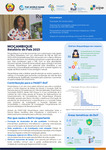
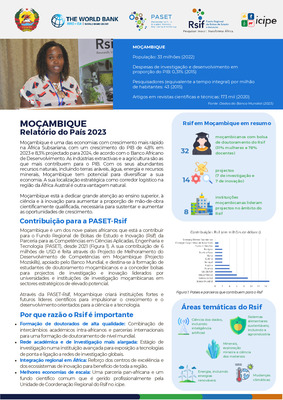
Rsif Moçambique Relatório do País 2023 - Portuguese
Regional Scholarship and Innovation Fund (Rsif)
Moçambique é uma das economias com crescimento mais rápido na África Subsariana, com um crescimento do PIB de 4,8% em 2023 e 8,3% projectado para 2024, de acordo com o Banco Africano de Desenvolvimento. Moçambique está a dedicar grande atenção ao ensino superior, à ciência e à inovação para aumentar a proporção de mão-de-obra cientificamente qualificada, necessária para sustentar e aumentar as oportunidades de crescimento. Moçambique é um dos nove países africanos que está a contribuir para o Fundo Regional de Bolsas de Estudo e Inovação (Rsif) da Parceria para as Competências em Ciências Aplicadas, Engenharia e Tecnologia (PASET), desde 2021. A sua contribuição de 6 milhões de USD é feita através do Projecto de Melhoramento do Desenvolvimento de Competências em Moçambique (Projecto Mozskills), apoiado pelo Banco Mundial, e destina-se à formação de estudantes de doutoramento moçambicanos e a conceder bolsas para projectos de investigação e inovação liderados por universidades e instituições de investigação moçambicanas emsectores estratégicos de elevado potencial. Através da PASET-Rsif, Moçambique criará instituições fortes e futuros líderes científicos para impulsionar o crescimento e o desenvolvimento orientadospara a ciência e a tecnologia. Há 32 moçambicanos com bolsa de doutoramento do Rsif (31% mulheres e 78% docentes). Foram concedidas 14 bolsas de investigação e inovação a oito instituições moçambicanas diferentes. O relatório chama a atenção para os futuros líderes científicos de Moçambique e destaca os projectos Rsif ; Modernizar a agricultura: Internet das Coisas e modelos preditivos de IA para a cadeia de valor agrícola. Incubadora para o desenvolvimento de protótipos e a comercialização de novos produtos agrícolas ; Tecnologia de secagem para reduzir as perdas pós-colheita e aumentar a qualidade dos produtos competitivos no mercado.
-
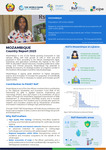
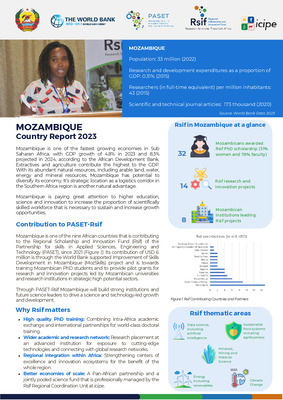
Rsif Mozambique Country Report 2023 - English
Regional Scholarship and Innovation Fund (Rsif)
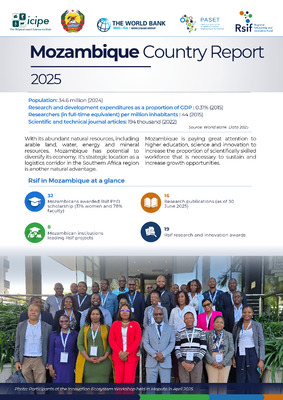
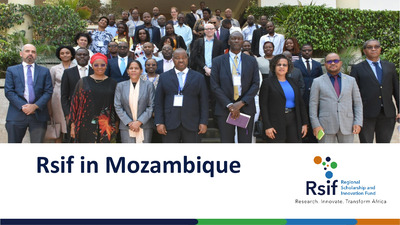
Mozambique is one of the fastest growing economies in Sub Saharan Africa, with GDP growth of 4.8% in 2023 and 8.3% projected in 2024, according to the African Development Bank. Mozambique is paying great attention to higher education, science and innovation to increase the proportion of scientifically skilled workforce that is necessary to sustain and increase growth opportunities. Mozambique is one of the nine African countries that is contributing to the Regional Scholarship and Innovation Fund (Rsif) of the Partnership for skills in Applied Sciences, Engineering and Technology (PASET), since 2021. Its contribution of USD 6 million is through the World Bank supported Improvement of Skills Development in Mozambique (MozSkills) project and is towards training Mozambican PhD students and to provide grants for research and innovation projects led by Mozambican universities and research institutions in strategic high potential sectors. Through PASET-Rsif Mozambique will build strong institutions and future science leaders to drive a science and technology-led growth and development. There are 32 Mozambicans awarded Rsif PhD scholarship (31% women and 78% faculty). 14 research and innovation grants have been awarded to eight different Mozambican institutions. The report turns the spotlight on Mozambique’s future science leaders and highlights Rsif projects; Modernizing agriculture: Internet of Things and AI predictive models for agricultural value chain. Incubator for prototype development and commercialization of new agri-products; and Drying technology for reducing post-harvest loss and increasing high-quality market-competitive products.
-
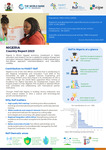
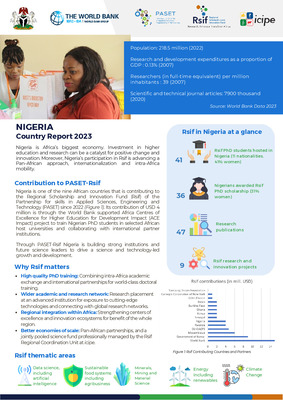
Rsif Nigeria Country Report 2023
Regional Scholarship and Innovation Fund (Rsif)
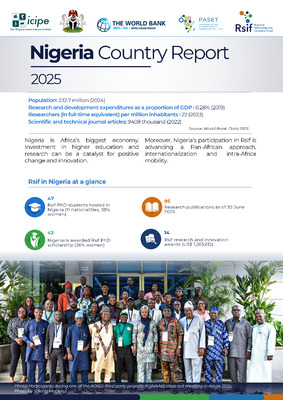
Nigeria is Africa’s biggest economy. Investment in higher education and research can be a catalyst for positive change and innovation. Moreover, Nigeria’s participation in Rsif is advancing a Pan-African approach, internationalization and intra-Africa mobility. Nigeria is one of the nine African countries that is contributing to the Regional Scholarship and Innovation Fund (Rsif) of the Partnership for skills in Applied Sciences, Engineering and Technology (PASET) since 2022. Its contribution of USD 4 million is through the World Bank supported Africa Centres of Excellence for Higher Education for Development Impact (ACE Impact) project, to train Nigerian PhD students in selected African host universities and collaborating with international partner institutions. Through PASET-Rsif Nigeria will build strong institutions and future science leaders to drive a science and technology-led growth and development. The African University of Science and Technology (AUST) in Abuja, Bayero University Kano (BUK) and University of Port Harcourt (UniPort) are among the 15 Rsif African Host Universities. There are 41 Rsif PhD students hosted in Nigeria (11 nationalities, 41% women) and 9 Rsif research and innovation projects awarded to Nigerian institutions. 36 Nigerians have been awarded Rsif PhD scholarship (31% women) and so far there are 47 research publications by the Rsif students. The report turns the spotlight on Nigerian Rsif Scholars and highlights how Rsif contributes to strengthening the university innovative potential.
-
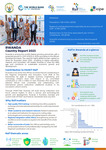
Rsif Rwanda Country Report 2023
Regional Scholarship and Innovation Fund (Rsif)
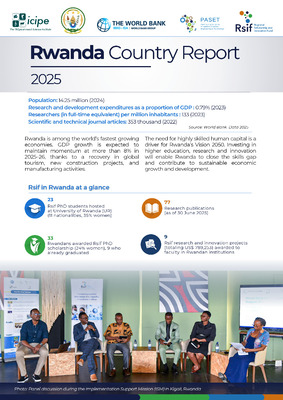
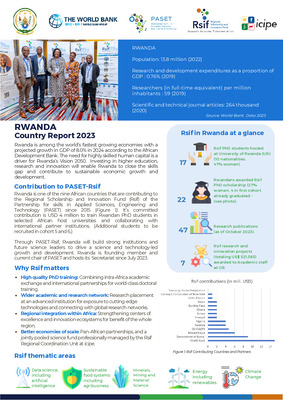
Rwanda is among the world’s fastest growing economies with a projected growth in GDP of 8.0% in 2024 according to the African Development Bank. The need for highly skilled human capital is a driver for Rwanda’s Vision 2050. Investing in higher education, research and innovation will enable Rwanda to close the skills gap and contribute to sustainable economic growth and development. Rwanda is one of the nine African countries that are contributing to the Regional Scholarship and Innovation Fund (Rsif) of the Partnership for skills in Applied Sciences, Engineering and Technology (PASET) since 2015. It’s committed contribution is USD 4 million to train Rwandan PhD students in selected African host universities and collaborating with international partner institutions. (Additional students to be recruited in cohort 5 and 6.) Through PASET-Rsif, Rwanda will build strong institutions and future science leaders to drive a science and technology-led growth and development. Rwanda is founding member and current chair of PASET and hosts its Secretariat since July 2023 University of Rwanda, one of the 15 Rsif African Host Universities, is hosting 17 Rsif funded PhD students (10 nationalities, 47% women). There are 22 Rwandan Rsif PhD students (27% women) and 47 research publications to date. There are 7 Rsif research and innovation projects in Rwanda. The report turns the spotlight on Rwandan Rsif Scholars and highlights projects in Molecular Microbiology and Antimicrobial Resistance and how Smart Beehiving Technology can multiply honey production.
-
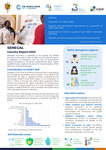
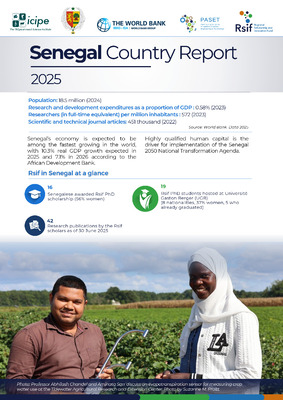
Rsif Senegal Country Report 2023 - English
Regional Scholarship and Innovation Fund (Rsif)
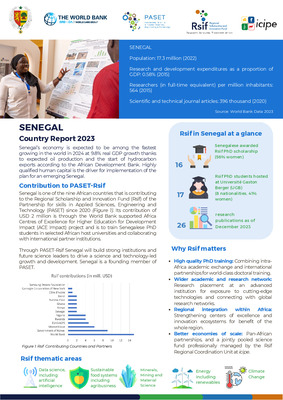
Senegal’s economy is expected to be among the fastest growing in the world in 2024 at 9.8% real GDP growth thanks to expected oil production and the start of hydrocarbon exports according to the African Development Bank. Highly qualified human capital is the driver for implementation of the plan for an merging Senegal. Senegal is one of the nine African countries that is contributing to the Regional Scholarship and Innovation Fund (Rsif) of the Partnership for skills in Applied Sciences, Engineering and Technology (PASET) since 2020. Its contribution of USD 2 million is financed through the World Bank supported Africa Centres of Excellence for Higher Education for Development Impact (ACE Impact) project, to train Senegalese PhD students in selected African host universities and collaborating with international partner institutions. University Gaston Berger, one of the 15 Rsif African Host Universities, is hosting 17 Rsif funded PhD students (8 nationalities, 41% women). There are 16 Senegalese Rsif PhD students (56% women) and 26 research publications to date. The report turns the spotlight on Senegalese Rsif scholars and highlights research in agrivoltaics and in Robust and Affordable Smart Agri-IoT Technology.
-
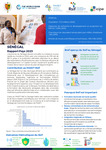
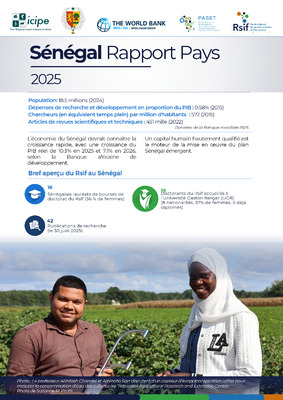
Rsif Sénégal Rapport pays 2023 - French
Regional Scholarship and Innovation Fund (Rsif)
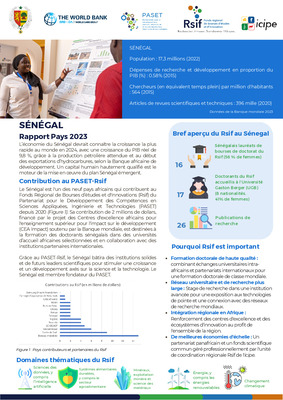
L’économie du Sénégal devrait connaître la croissance la plus rapide au monde en 2024, avec une croissance du PIB réel de 9,8 %, grâce à la production pétrolière attendue et au début des exportations d’hydrocarbures, selon la Banque africaine de développement. Un capital humain hautement qualifié est le moteur de la mise en œuvre du plan Sénégal émergent. Le Sénégal est l'un des neuf pays africains qui contribuent au Fonds Régional de Bourses d’études et d'Innovations (Rsif) du Partenariat pour le Développement des Compétences en Sciences Appliquées, Ingénierie et Technologies (PASET) depuis 2020. Sa contribution de 2 millions de dollars est financé par le projet de Centres d’excellence d’éducation supérieure africains pour un impact sur le développement (CEA Impact), destinées à la formation des doctorants sénégalais dans des universités d’accueil africaines sélectionnées et en collaboration avec des institutions partenaires internationales. Grâce au PASET-Rsif, le Sénégal bâtira des institutions solides et de futurs leaders scientifiques pour stimuler une croissance et un développement axés sur la science et la technologie. L’Université Gaston Berger, l’une des 15 universités d’acceuil africaines de Rsif, accueille 17 doctorants financés par le Rsif (41% de femmes, 8 nationalités). Il y a 16 sénégalais lauréats de bourses de doctorat du Rsif (56% de femmes) A ce jour il y a 26 publications de recherche. Le rapport met en lumière les chercheurs sénégalais du Rsif, la recherche en agrivoltaïque et en technologie Agri-IoT intelligente robuste et abordable.
-
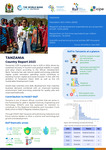
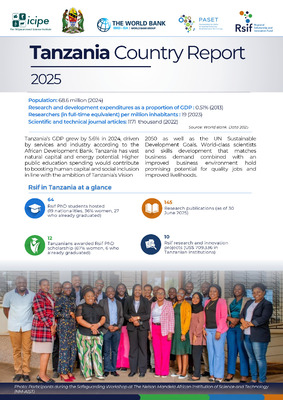
Rsif Tanzania Country Report 2023
Regional Scholarship and Innovation Fund (Rsif)
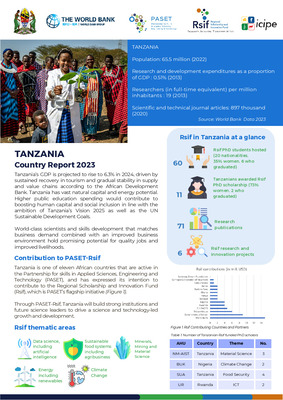
Tanzania’s GDP is projected to rise to 6.3% in 2024. Higher public education spending would contribute to boosting human capital and social inclusion in line with the ambition of Tanzania’s Vision 2025 as well as the UN Sustainable Development Goals. World-class scientists and skills development that matches business demand combined with an improved business environment hold promising potential for quality jobs and improved livelihoods. Tanzania is one of eleven African countries that are active in the Partnership for skills in Applied Sciences, Engineering and Technology (PASET), and has expressed its intention to contribute to the Regional Scholarship and Innovation Fund (Rsif), which is PASET’s flagship initiative. Rsif provides benefits to Tanzania by supporting the building of strong institutions and training the future leaders in the applied sciences, engineering, and technology to drive a science and knowledge-led agenda. Sokoine University of Agriculture and Nelson Mandela African Institution of Science and Technology are Rsif African Host Universities. There are 60 Rsif PhD students in Tanzania (20 nationalities, 35% women). 11 Tanzanians were awarded Rsif PhD scholarship (73% women). There are 71 research publications to date and 6 research and innovation projects under implementation in Tanzania. The report turns the spotlight on Tanzania’s Rsif scholars and highlight an Rsif funded project with major contribution in reducing post-harvest losses and environmental remediation from adapting appropriate technology for drying of biomaterials.
-
Rsif Benin Country Report 2022 - English
Regional Scholarship and Innovation Fund (Rsif)
Benin contributed USD 2 million to Rsif in 2021. There are 20 competitively selected Beninese Rsif doctoral scholars (40% women) in five thematic areas in nine different Rsif African host universities across the continent. There are so far 1 Beninese alumnus and 7 publications by Beninese scholars. University of Abomey-Calavi was competitively selected as an Rsif African host university in ICT, including artificial intelligence and data science. In 2022, the PhD programme in Information technologies and communication at Institute of Mathematics and Physical Sciences, admitted eight Rsif funded students from three countries. Three projects in agri-based digital innovation are under implementation in Benin.
-
Rsif Burkina Faso Country Report 2022 – English
Regional Scholarship and Innovation Fund (Rsif)
Burkina Faso contributed USD 2 million to Rsif in 2020. There are 16 competitively selected Burkinabè Rsif doctoral scholars (1 woman, 15 men) registered in four thematic areas in seven different Rsif African host universities across the continent. Twelve of these started their studies in 2022. There are so far 4 journal publications by Burkinabè Rsif students. Institut International d'Ingénierie de l'Eau et de l'Environnement (2iE) was competitively selected as an Rsif African host university in Energy including renewables and admitted its first cohort of Rsif funded students in 2022. 2iE is hosting 13 Rsif students from five different African nationalities (31% women) in its PhD programme in Sciences and Technologies of Water, Energy and the Environment. An Rsif project funded by the European Union’s ACP Innovation Fund on “Precision Pest and Disease Management System based on Multidimensional Big Data” is also under implementation in Burkina Faso.
-
Rsif Burkina Faso Rapport pays 2022 - French
Regional Scholarship and Innovation Fund (Rsif)
Le Burkina Faso a apporté une contribution au Rsif de 2 millions de dollars en 2020. Il y a 16 doctorants Rsif Burkinabè sélectionnés par concours (1 femme, 15 hommes) inscrits dans quatre domaines thématiques dans sept universités hôtes africaines différentes à travers le continent. Douze d’entre eux ont commencé leurs études en 2022. Il y a déjà 4 publications par les doctorants Rsif Burkinabè. L’Institut International d'Ingénierie de l'Eau et de l'Environnement (2iE) a été sélectionnée de manière compétitive comme université hôte africaine du Rsif dans l’énergie, y compris les énergies renouvelables et a admis sa première cohorte d'étudiants financés par le Rsif en 2022. L’Institut 2iE accueille 13 étudiants Rsif de cinq nationalités africaines différentes (31% de femmes) dans son programme de doctorat en Sciences et Technologies de l'Eau, de l'Énergie et de l'Environnement. Un projet Rsif financé par le Fonds d'Innovation ACP de l'Union européenne sur le "Système de gestion de précision des ravageurs et des maladies basé sur le Big Data multidimensionnel" est également en cours de mise en œuvre au Burkina Faso.
-
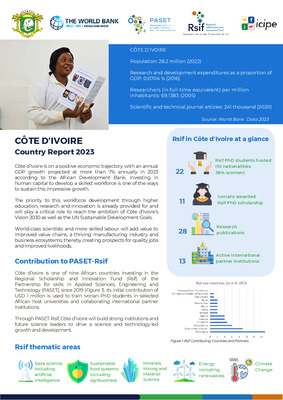
Rsif Côte d’Ivoire Country Report 2022 - English
Regional Scholarship and Innovation Fund (Rsif)
Côte d’Ivoire contributed USD 1 million to Rsif in 2019. There are 11 competitively selected Ivorian Rsif PhD students (27% women) in four thematic areas in four different African host universities. Université Félix Houphouët-Boigny (UFHB) was competitively selected as an Rsif African host university in climate change in 2017. The Africa Center of Excellence for Climate Change Biodiversity and Sustainable Agriculture (CCBAD) is hosting 22 Rsif PhD scholars including 16 international students (36% women, 10 nationalities). There are so 1 Rsif alumni who graduated from UFHB and 16 publications by Rsif students at UFHB. An Rsif project for sustainable and innovative production of yams in Côte d'Ivoire by post-harvest pest control is under implementation. Two biopesticides for yam fungi has been approved and registered.
-
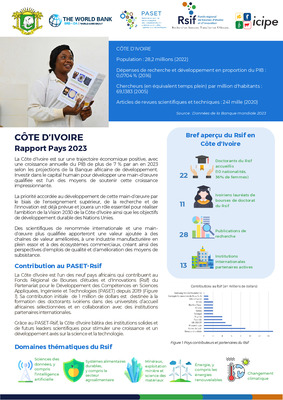
Rsif Côte d’Ivoire Rapport pays 2022 - French
Regional Scholarship and Innovation Fund (Rsif)
La Côte d'Ivoire a apporté une contribution au Rsif de 1 million de dollars en 2019. Il y a 11 doctorants ivoiriens Rsif sélectionnés par concours (27% de femmes) dans quatre domaines thématiques dans quatre universités hôtes africaines différentes. L'Université Félix Houphouët-Boigny (UFHB) a été sélectionnée de manière compétitive comme université hôte africaine du Rsif en changement climatique en 2017. Le Centre d'Excellence Africain sur le Changement Climatique, la Biodiversité et l'Agriculture Durable (CCBAD) accueille 22 doctorants Rsif dont 16 étudiants internationaux (36 % femmes, 10 nationalités). Il y a déjà 1 diplômé et 16 publications par les doctorants Rsif à l'UFHB. Un projet Rsif de Production durable et innovante de l’igname en Côte d’Ivoire par le contrôle des parasites post-récolte est en cours de mise en œuvre. Deux biopesticides pour les champignons de l'igname ont été approuvés et enregistrés.
-
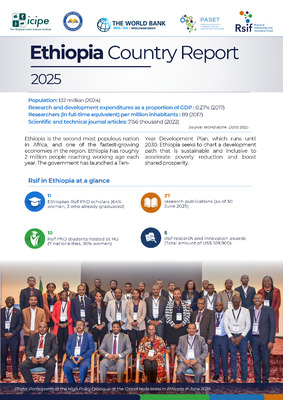
Rsif Ethiopia Country Report 2022
Regional Scholarship and Innovation Fund (Rsif)
Ethiopia is a founding member of PASET and has committed to make an initial USD 2 million contribution to Rsif. There are 11 competitively selected Ethiopian Rsif doctoral scholars (55% women) registered in four thematic areas in seven different Rsif African host universities across the continent. There are so far 6 journal publications by the Ethiopian Rsif students. Haramaya University was competitively selected as an Rsif African Host University in climate change and admitted its first cohort of Rsif funded PhD students in 2022. The African Center of Excellence for Climate Smart Agriculture and Biodiversity is hosting 9 Rsif students from six different nationalities (33% women) in the PhD programme in climate smart agriculture and biodiversity conservation.
-
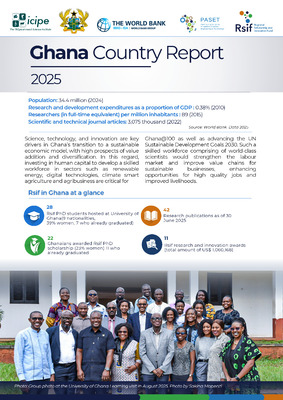
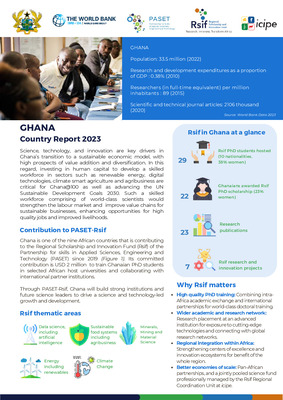
Rsif Ghana Country Report 2022
Regional Scholarship and Innovation Fund (Rsif)
Ghana contributed USD 2 million to Rsif in 2020. Ghana is the current vice-chair of PASET. There are 22 competitively selected Ghanaian Rsif doctoral scholars (23% women) in four thematic areas in seven different Rsif African Host Universities across the continent. There are so far 1 Ghanaian Rsif alumni and 12 publications by Ghanaian Rsif students. University of Ghana (UG) was competitively selected as an Rsif African Host University in food security and agribusiness in 2019 (PhD Program in Applied Agricultural and Policy/Agribusiness). UG is hosting 29 Rsif funded PhD students (38% women) from ten different nationalities. Seven Rsif funded research and innovation projects are under implementation in Ghana.
-
Rsif Kenya Country Report 2022
Regional Scholarship and Innovation Fund (Rsif)
Kenya was the first country to contribute USD 2 million to Rsif in 2018 followed by Rwanda, and Kenya is the former chair of PASET. There are 25 competitively selected Kenyan Rsif doctoral scholars (68% women) in four thematic areas in eight different Rsif African Host Universities across the continent. There are so far 3 Kenyan Rsif alumni and 32 publications by Kenyan Rsif students. Two Kenyan universities were competitively selected as Rsif African host universities: University of Nairobi in Energy, including renewables (PhD in Physics) and Kenyatta University in Minerals, Mining and Material Science area (PhD in Material Science). They are hosting a total of 37 Rsif funded PhD students from fourteen different nationalities. Seven Rsif funded research and innovation projects are under implementation in Kenya.
-
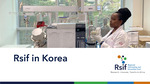
Rsif Korea Country Report 2022
Regional Scholarship and Innovation Fund (Rsif)
Government of Korea contributed USD 9 million to Rsif in 2018. There are 72 competitively selected Korean funded Rsif PhD students (44% women) from twenty Sub-Saharan African nationalities. They study across all five thematic areas in thirteen different African Host Universities. Seven advanced Korean institutions have signed MOUs with PASET to host Rsif students for research placement in Korea. So far 35 PhD students have been matched. There are 4 Rsif graduates who completed their research placement in Korea. Korea also supports 21 Rsif research projects implemented by faculty in African universities and returning Rsif graduates.
-
Rsif Mozambique Country Report 2022 - English
Regional Scholarship and Innovation Fund (Rsif)
Mozambique contributed USD 6 million to Rsif in 2021. There are 32 competitively selected Mozambican Rsif doctoral scholars (31% women and 78% faculty) in all five thematic areas in ten different Rsif African host universities across the continent. Twelve Rsif funded research and innovation projects are under implementation by Mozambican institutions.
-
Rsif Nigeria Country Report 2022
Regional Scholarship and Innovation Fund (Rsif)
Nigeria contributed USD 4 million to Rsif in 2022. There are 36 competitively selected Nigerian Rsif funded PhD students (31% women) in five thematic areas in 12 different African host universities, including one who has graduated. Three Nigerian universities were competitively selected as Rsif African host universities: African University of Science and Technology (AUST), Pan-African Materials Institute; Bayero University Kano, Centre of Dryland Agriculture (PhD in Natural Resource Management and Climate Change); University of Port Harcourt, Africa Center of Excellence in Oilfield Chemicals Research (PhD in Petroleum and Gas Engineering / Energy Economics). They are hosting a total of 41 Rsif funded PhD students from eleven different nationalities, with 23 publications in high impact journals to date. There are nine Rsif funded research and innovation projects ongoing in Nigeria.
-
Rsif Rwanda Country Report 2022
Regional Scholarship and Innovation Fund (Rsif)
. Rwanda is the current chair of PASET and the first country to make a second additional USD 2 million contribution to Rsif. There are 22 competitively selected Rwandan Rsif PhD students in five thematic areas in eight different African Host Universities across the continent. There are so far four Rwandan Rsif alumni and 39 publications by Rwandan Rsif students. University of Rwanda was competitively selected as an Rsif African host university in ICT, including artificial intelligence and data science in 2019. The ACE Internet of Things (IoT) is hosting 18 Rsif funded students (44% women) from eleven different nationalities. Seven Rsif funded research and innovation projects are under implem
-
Rsif Sénégal 2022 - français
Regional Scholarship and Innovation Fund (Rsif)
Le Sénégal, membre fondateur du PASET, a apporté une contribution au Rsif de 2 millions de dollars en 2020. Il y a 15 doctorants sénégalais actifs sélectionnés par concours (53% de femmes) dans cinq domaines thématiques dans cinq universités hôtes africaines différentes. L'Université Gaston Berger a été sélectionnée de manière compétitive comme université hôte africaine Rsif en TIC, y compris l'intelligence artificielle et la science des données en 2017. Le programme de doctorat en informatique du Centre d'Excellence Africain en Mathématiques, Informatique et TIC (MITIC) accueille 17 doctorants Rsif (41% de femmes) de huit nationalités africaines. Il y a déjà un diplômé et 14 publications des doctorants Rsif à l’UGB.
-
Rsif Senegal Country Report 2022 - English
Regional Scholarship and Innovation Fund (Rsif)
Senegal is a founding member of PASET and contributed USD 2 million to Rsif in 2020. There are 15 competitively selected Senegalese active Rsif PhD students (53% women) in five thematic areas in five different African Host Universities. University of Gaston Berger was competitively selected as an Rsif African Host University in ICT, including artificial intelligence and data science in 2017. The PhD programme in Computer Science at the African Center of Excellence (MITIC) is hosting 17 Rsif PhD scholars (41% women) from eight African nationalities. There is one Rsif alumni who graduated from UGB and 14 journal publications by Rsif UGB students so far.
-
Rsif Tanzania Country Report 2022
Rsif in Tanzania 2022
Tanzania is part of PASET and has expressed its intention to contribute to Rsif. There are 11 competitively selected Tanzanian Rsif PhD students (73% women) in four thematic areas in four different African Host Universities. Two Tanzanian universities were competitively selected as Rsif African host universities: Sokoine University of Agriculture in Food security and agribusiness in 2017 and Nelson Mandela African Institution of Science and Technology, (NM-AIST) in mineral, mining and material science in 2019. They are hosting a total of 60 Rsif PhD students from 20 different nationalities with 50 publications in high impact journals to date. There are 6 Rsif funded research and innovation projects under implementation in Tanzania.
-
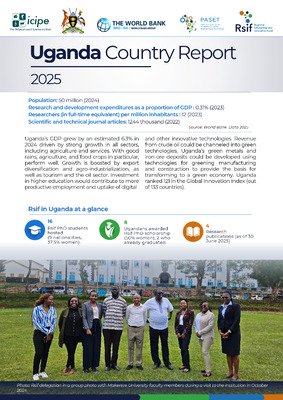
Rsif Uganda Country Report 2022
Regional Scholarship and Innovation Fund (Rsif)
Uganda has expressed its intention to join PASET and contribute to Rsif. There are eight competitively selected Ugandan Rsif funded PhD students (50% women) in five thematic areas in eight different African host universities. Makerere University, a competitively selected Rsif African host university in food security and agribusiness, admitted its first cohort of Rsif funded students in 2022. The PhD programme in Plant Breeding and Biotechnology at Makerere Regional Centre for Crop Improvement (MaRCCi) is hosting 10 Rsif PhD students from seven nationalities (40% women).
Printing is not supported at the primary Gallery Thumbnail page. Please first navigate to a specific Image before printing.