-
Assessment of Honeybee Colony Carrying Capacity in Sidama, South and Southwest Ethiopia
International Centre of Insect Physiology and Ecology (icipe)
Apiculture remains the primary economic activity for Mass Youth Employment in Apiculture (MaYEA)’s youth partners in Ethiopia, and estimating the honey flow period is essential for effective beekeeping operations. Identifying and understanding the distribution and flowering patterns of bee forage plants enables beekeepers to synchronize colony management practices with the peak availability of nectar and pollen to achieve increased honey yields and improved quality of honey. Thus, optimizing floral resource use and ensuring sustainable honey production require a clear understanding of vegetation-based honey production potential and an area's honeybee colony carrying capacity. In response to this need, the International Centre of Insect Physiology and Ecology (icipe), in collaboration with the Mastercard Foundation, Ethiopian Relief Organization (ORDA Ethiopia), International Institute of Rural Reconstruction (IIRR), and other implementing partners, conducted a comprehensive assessment in 20 MaYEA intervention woredas located in the South, Southwest, and Sidama regions of Ethiopia.
-
Unlocking the Potential of Ethiopia’s Apiculture Sector: A Diagnostic and Baseline Study
International Centre of Insect Physiology and Ecology (icipe)
icipe, ORDA Ethiopia and IIRR jointly implement Mass Youth Employment in Apiculture (MaYEA) Program in partnership with the Mastercard Foundation. The program aims to enable 1 million young women secure dignified and fulfilling jobs by addressing key constraints and unlock the apiculture sector’s and allied value chains employment generation potential building on experiences from previous programs such as the More Young Entrepreneurs in Silk and Honey (MOYESH) Program. MaYEA program aims to enhance honey and beeswax production, improve quality standards, promote value addition, and create an enabling environment for youth engagement in the sector. To guide this effort, this study aims to: (i) identify the challenges facing the apiculture sector, (ii) map the key actors in the value chain, and (iii) identify systemic barriers that hinder the sector's potential for growth and employment creation.
-
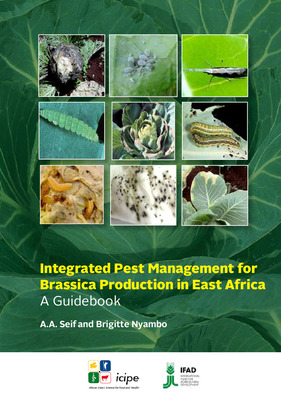
Integrated Pest Management for Brassica Production in East Africa: A Guidebook
A. A. Seif and Brigitte Nyambo
Introduction
Many of the important agricultural and horticultural crops cultivated worldwide belong to the genus Brassica.
The main brassicas grown in East Africa are cabbage (Brassica oleracea L. var. capitata); kale, also called choumolea (B. oleracea L. var. acephala); Chinese cabbage (B. campestris L. var. sinensis); cauliflower (B. oleracea L. var. botrytis); broccoli (B. oleracea L. var. botrytis); and Brussel sprouts (B. oleracea L. var. gemmifera).
These vegetables are grown mainly for local markets and domestic use. They are valuable sources of vitamins and minerals, as well as a source of cash for small-scale farmers in rural and peri-urban areas. However, production is often constrained by damage caused by a range of insects, diseases, nematodes and weeds. The range of pests attacking brassicas is similar, but the relative importance of individual pest species varies between the different crops and among countries. The major insect pests of brassica include diamondback moth (DBM), cabbage aphids, cabbage webworm, cabbage cluster caterpillar and Bagrada bugs. Black rot, turnip mosaic virus and bacterial soft rot constitute the main diseases. Farmers in East Africa depend overwhelmingly on the use of pesticides—often applied on a calendar basis—for pest control. The control of these pests is becoming increasingly difficult, uneconomic and environmentally damaging. Important pests such as the DBM have developed resistance to a wide range of commonly used pesticides. Furthermore, the incidence of turnip mosaic virus, which is transmitted by aphids, has increased in East Africa in recent years. As a result many farmers have resorted to the application of insecticide cocktails, as well as spraying more often. This has led to an increase in the level of contamination of the farm environment; high pesticide residues in the produce; health risks to farm workers and consumers; and increased cost of production. There is therefore urgent need for alternative control options, in order to become less dependent on synthetic pesticides.
-
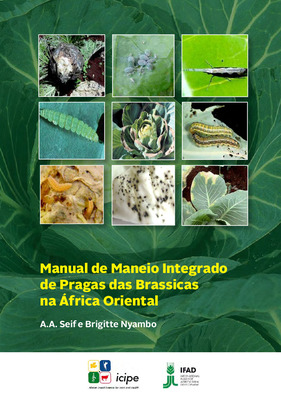
Manual de Maneio Integrado de Pragas das Brassicas na áfrica Oriental
A. A. Seif and Brigitte Nyambo
Introdução
A maioria das hortícolas produzidas no mundo pertencem ao género Brassica. As principais brassicas produzidas na áfrica oriental são o repolho (Brassica oleracea L. var. capitata), a couve, conhecida na região como “choumolea” (B. oleracea L. var. acephala), a couve chinesa (B. campestris L.var.sinensis), a couve-flor (B. oleracea L. var. botrytis), o bróculo (B.oleracea L. var.botrytis), e a couve-de-Bruxelas (B. oleracea L. var.gemmifera).
Estas hortícolas são produzidas principalmente para os mercados locais e uso doméstico. São importantes fontes de vitaminas e minerais, assim como fonte de renda para pequenos agricultores tanto nas zonas rurais como peri-urbanas. Porém, a produção é muitas vezes constrangida por danos causados por uma diversidade de pragas, doenças, nemátodos e infestantes. O grupo de pragas que atacam as brássicas é idêntico, mas a importância relativa de espécies de pragas individuais varia entre diferentes culturas e entre países. As principais pragas das brássicas incluem a traça da couve, afídeos da couve, broca da couve, a lagarta gregária da couve e o percevejo da couve. A podridão negra, virus do mosaico do nabo e podridão mole constituem as principais doenças.
-
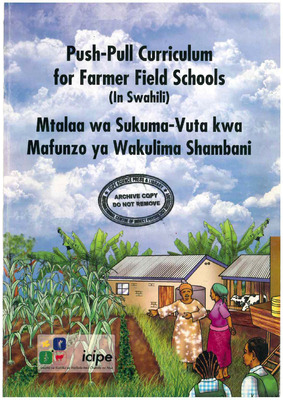
Push-Pull Curriculum for Farmer Field Schools (In Swahili): Mtaala wa Sukuma-Vuta kwa Mafunzo ya Wakulima Shambani
Z. R. Khan, D. M. Amudavi, C. Midega, J. Pittchar, D. Nyagol, G. Genga, A. Ndiege, P. Akelo, J. A. Pickett, L. J. Wadhams, F. Muyekho, and B. Nyateng
Dibaji
Mtaa huu wa Sukuma-Vuta kwa shule za mafunzo ya kilimo shambani (FFS) ni hatua kubwa katika kuingiza teknolojia ya Sukuma-Vuta katika mifumo ya utoaji ushauri kwa kilimo Afrika mashariki na kusini. Njia hii ya FFS inalenga kuwasaidia wakulima katika kuimarisha ubora wa teknolojia ya kusambaza na kuhakikisha wakulima wengi wanafaidika kutokana na teknolojia bunifu.
Ingawa taasisi za utafiti zimetayarisha teknolojia mrseto za kutatua matatizo ya uzalishaji katika mifumo mingi ya kilimo katika mashamba madogo, uzalishaji katika kilimo umeendelea kushuka. Teknolojia nyingi hazijasambazwa vyema kwa sehemu kubwa ya wakulima na hivyo kubaki kwa kiwango kidogo cha matumizi, isipokuwa katika sehemu ndogo ambapo zilifanyiwa majaribio. Itoshe, nyingine hazijajaribiwa katika mashamba ya wakulima ili kutoa fursa kwa mabadiliko kuambatana na hali za maeneo husika. Mbinu zisizofaa za usimamizi na kuendelea kuongezeka kwa mzigo katika rasilimali, hasa rasilimali asili na rasilimali za kiuchumi kumezidisha hali hii.
Mkakati wa Sukuma-Vuta ni teknolojia ya kimsingi iliyo na uwezo wa kuimarisha maisha ya familia za wakulima wa mashamba madogo na familia za mashambani, kuongeza uzalishaji wa kilimo na kuimarisha uendelevu wa mazingira. Matokeo haya yanaweza kufikiwa kwa kuangazia matatizo ya kwekwe za striga, stemborer, na viwango vya chini vya rutuba kwenye mchanga. Haya ni matatizo makuu yanayohathiri uzalishaji na nafaka katika Afrika Kusini mwa Jangwa la Sahara kwa jumla na hasa katika eneo la Afrika Mashariki. Utafiti uliofanywa na icipe, ikishirikiana na washirika wake, hasa KARI, Wizara ya Kilimo, Wizara ya Mifugo na Uvuvi nchini Kenya, na Rothamsted Research nchini Uingereza, umeonyesha kuwa kupanda nyasi aina ya Napier (hasa aina ya Bana) kuzunguka shamba la mahindi lililopandwa mimea ya jamii ya maharagwe humo ndani, desmodium (silverleaf au greenleaf), hupunguza pakubwa matatizo ya striga na stemborer.
Teknolojia ya Sukuma-Vuta kwa sasa inatumiwa na wakulima zaidi ya 7000 katika wilaya 19 nchini Kenya, wilaya 5 Uganda, na mafunzo na maonyesho yameanza nchini Tanzania. Lengo letu ni kueneza teknolojia hii kwa wakulima wengi kadiri inavyowezekana katika maeneo tofauti ya kilimo-ikolojia, na majimbo. Ili kufanya hivyo, matumizi ya mfumo Shule za Mafunzo kwa Wakulima Shambani (FFS) yanafaa. Sukuma-Vuta ni teknolojia inayohitaji ujuzi mwingi na huhitaji mtaala uliotayarishwa vyema kuwawezesha wakulima kuelewa na kutumia katika mashamba yao. Mtaala ni mwongozo wa kutoa fursa nyingi za mafunzo katika njia nyingi kwa kuifikisha kwa wakulima wa mashamba madogo. Aidha, ni rasilimali muhimu katika mfumo wa kitaifa wa kutoa ushauri huduma na ushauri kwa wakulima, NGOs na mashirika ya kijamii.
icipe inatumaini kuwa mtaala huu utamairisha ufahamu wa wakulima wa mifumo ya kilimo na ikolojia, changamoto katika uzalishaji wa nafaka na uwezo wa teknolojia ya Sukuma-Vuta wa kuzitatua. Kadhalika, kuna matumaini kuwa itatia nguvu uwezo wa wakazi kufanya maamuzi na kustawisha teknolojia ili kuwawezesha kuwa na kilimo kinachozalisha zaidi na kilicho endelevu.
Prof. Christian Borgemeister
Mkurugenzi Mkuu, icipe, Nairobi, Kenya
-
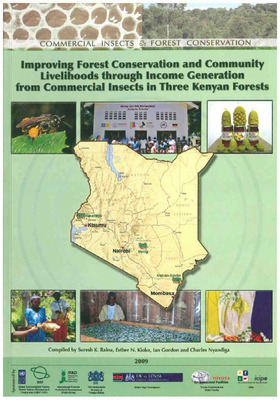
Improving Forest Conservation and Community Livelihoods through Income Generation from Commercial Insects in Three Kenyan Forests
Suresh K. Raina, Esther N. Kioko, Ian Gordon, Charles Nyandiga, Elliud Muli, Everlyn Nguku, and Esther Wang’ombe
Foreword
The aim of this project was to strengthen the protection of three different forest reserves in Kenya by improving incentives to adjacent communities for them to collaborate in forest management. Such incentives are most effective when they are based on sustainable use of forest biodiversity, since this gives local communities a direct stake in forest conservation without threatening the resource base. Commercial insects (like bees and silkmoths) are ideal for this purpose. They give quick rewards, use renewable resources (nectar, pollen and leaves), and are technically relatively simple and easily adopted. In the case of bees, there are also positive synergies resulting from their pollination activities in both the forests and adjacent farmland.
The project activities were designed to link bee keeping and silk production to Participatory Forest Management (PFM) initiatives in Kenya. PFM has become widely accepted as an effective mechanism for forest conservation, but it suffers from a lack of incentives for community involvement. This problem is exacerbated when conservation requires reduced extraction of forest products such as timber, poles and fuelwood. Commercial insect enterprises can compensate for this foregone resource use and provide an incentive for local communities to engage in forest management. They are particularly suitable for use in buffer zones around protected forests.
In this context, the project provided (i) support for conservation of forest-protected areas through improved buffer zone management by local communities; and (ii) improved livelihoods of forest adjacent communities through the commercial use of insect resources, linked to forest habitats.
These strategies were used to strengthen the community forest associations, and forest managers in the target sites. All these efforts were coordinated at the project steering committee and tripartite review meetings by the multiple stakeholders.
The project has demonstrated the effectiveness of this approach to development and forest conservation. We look forward to the mainstreaming of commercial insect activities throughout the forest sector in Africa.
Christian Borgemeister Director General icipe
-
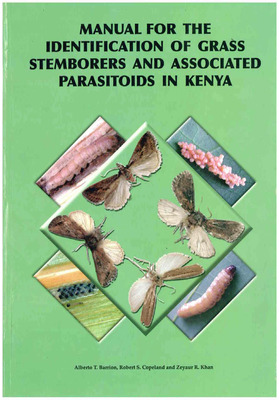
Manual for the Identification of Grass Stemborers and Associated Parasitoids in Kenya
Alberto T. Barrion, Robert S. Copeland, and Zeyaur R. Khan
Foreword
This manual illustrates many of the stemborers and associated insects of grasses in Kenya, and provides keys for their identification. It can be used together with icipe’s booklet A Primer on Grass Identification and Their Uses in Kenya, which provides diagnostic and pictorial information on grass species that abound in and around agricultural lands in Kenya.
It is of paramount importance to identify stemborers and their natural enemies associated with grasses to implement ways of using native grasses to manage insect pests in farmers’ fields. Wild grasses may act to repel or physically block pests of cereal crops, limiting access to crop plants. Grasses may also serve as a preferred habitat for beneficial insects and spiders that parasitise or prey on pest species. Proper management of wild grasses around crop fields can provide a natural resource of beneficial species of parasitoids and predators, increasing the chances of self-sustainable agriculture development among resource-poor farmers throughout Kenya. In this manual, the focus is on the pests and their parasitoids. As the technologies for self-regulatory pest management and sustainable agriculture grow more sophisticated and specific, correct identification of pest insects and their enemies is very important. However, there is presently no single manual available that offers users a tool to identify insects to at least the generic level. This manual addresses that need.
The primary target users of this manual are field or laboratory technicians and researchers. Technical language has been minimised as far as possible. However, many species of stemborers on grasses look similar, and identification based solely on external morphological features can be frustratingly difficult. This is particularly true for moth species of the genera Chilo, Sesamia and Busseola, especially when adult specimens are rubbed. Therefore, photographic images of the genitalia of most stem-boring moths have been included to provide help in identification to the species level. The illustrations and photos should facilitate the identification of stemborers and their associated insects reared from tall grasses. These data will help to determine the grass species that are important for conservation and maintenance of insect biodiversity.
I hope the manual will be a useful tool in identifying the stemborers on grasses and their natural enemies associated with the wild and cultivated grasses of Kenya, and that it also provides information useful for supporting self-regulatory pest management for sustainable agriculture and the conservation of biological diversity.
C. Borgemeister Director General, icipe – African Insect Science for Food and Health
-
A Field Guide to the Management of Economically Important Tephritid Fruit Flies in Africa, Second Edition
S. Ekesi and M. K. Billah
Fruit and vegetable production is one of the fastest-growing agricultural sectors in Africa, providing both income and employment to growers and exporters alike. The range of fruits and vegetables grown is diverse. Mangoes, citrus, apple, papaya, passion, guava, avocado, cucumber, pumpkin and watermelon are among the most common fruits and vegetables grown for domestic urban markets and for export to major outlets in Europe, the Middle East, Japan and USA. This growth is changing the dietary patterns leading to increased consumption of fruits and vegetables. However, different types of insect pests afflict production in Africa, and perhaps none have gained greater notoriety than the fruit flies (Diptera: Tephritidae). The enormous losses they cause through direct damage to fruits and vegetables and loss of market opportunities through imposition of strict quarantine regulations by importing countries to prevent entry and establishment of fruit flies demand urgent need for implementation of sustainable management practices for fruit flies control. The introduction of uniform and strict quarantine restrictions and the maximum residue level (MRL) regulations in the European Union compound the existing fruit fly problem and jeopardise the lucrative export of fresh fruits and vegetables from Africa. Lack of local expertise in fruit fly management makes it difficult to respond in a timely and efficient manner to the challenges imposed by fruit flies. The correct identification of fruit flies occurring in a particular area and their damage symptoms is a first step towards developing appropriate management strategies.
-
Mfumo Wa kilimo Wa Sukuma-vuta Waimarisha Hali Ya Maisha
International Centre of Insect Physiology and Ecology (icipe)
Ujumbe maalum wa icipe ni kusaidia kumaliza umaskini, kuona kuwa kuna chakula cha kutosha na kuimarisha kwa jumla hali ya afya ya watu kupitia mada hizi, kwa kuanzisha na kutoa njia na mifakati ya kusimamia mimea aina ya kunde yenye manufaa na lisyokuwa na manufaa, huku ikilinda mali asili kupitia utafiti na kutoa mafunzo ya kuongeza maarifa.
-
Push-pull: Changing Lives
International Centre of Insect Physiology and Ecology (icipe)
icipe's mission is to help alleviate poverty, ensure food security and improve the overall health status of peoples of the tropics by developing and extending management tools and strategies for harmful and useful arthropods, while preserving the natural resource base through research and capacity building.
-
Push-pull Curicullum for For Farmer Field Schools
International Centre of Insect Physiology and Ecology (icipe)
Foreword
This push-pull curriculum for farmer field schools (FSS) is a major step towards getting the push-pull technology into the national extension systems in eastern and southern Africa. The FFS approach aims at supporting farmers by improving the quality of disseminating technology to ensure that majority of the farmers benefit from innovative technologies.
While research institutions have developed a range of technologies to solve local production problems in most smallholder farming systems, agricultural productivity has continued to decline. Many of the technologies have not been effectively disseminated to majority of the farmers and hence remain largely unknown except in few pilot areas. Still, others have not been tested on-farm by the farmers to allow adjustment to local conditions. Inappropriate management practices and increased pressures on resources, especially natural and economic resources, worsen the situation.
The push-pull strategy is a platform technology that has potential to improve livelihoods of smallholder farmers and rural families, increase agricultural productivity and improve environmental sustainability. These outcomes can be achieved by addressing problems of striga weed, stemborers and low soil fertility. These are major problems that constrain cereal production in sub-Saharan Africa in general and eastern Africa region in particular. Research conducted by icipe in collaboration with its partners, particularly KARI, Ministry of Agriculture, Ministry of Livestock and Fisheries in Kenya, and Rothamsted Research in UK, has shown that planting Napier grass (especially Bana variety) around a maize field intercropped with a fodder legume, desmodium (silverleaf or greenleaf), significantly reduces the problems of striga and stemborers.
The push-pull technology is now practised by more than 47,000 farmers in 19 districts in Kenya, 5 districts in Uganda, and training and demonstrations have started in Tanzania. Our aim is to expand this technology to as many farmers as possible in different agroecological zones, districts, and regions. To do so, the use of the Farmer Field School (FFS) approach is appropriate. Push-pull is a knowledge-intensive technology and requires a well-designed curriculum to enable farmers to understand and apply it on their farms. The curriculum is a roadmap for providing a range of learning opportunities for the various entry points of the technology for the smallholder farmers. It is also an important resource for the national extension system, the NGOs and the community-based organisations.
icipe hopes that this curriculum will enhance farmers’ understanding of their agroecosystems, cereal production constraints and potential of push-pull technology to address them. It is also hoped that it shall strengthen local decision making and technology development capacities for more productive and sustainable agriculture.
Prof. Christian Borgemeister Director General, icipe Nairobi, Kenya
-
A Field Guide to the Management of Economically Important Tephritid Fruit Flies in Africa
S. Ekesi and M. K. Billah
Introduction
Fruit and vegetable production is one of the fastest-growing agricultural sectors in Africa, providing both income and employment to growers and exporters alike. The range of fruits and vegetables grown is diverse. Mangoes, citrus, apple, papaya, passion, guava, avocado, cucumber, pumpkin and watermelon are among the most common fruits and vegetables grown for domestic urban markets and for export to major outlets in Europe and the Middle East. This growth is changing the dietary patterns leading to increased consumption of fruits and vegetables. However, different types of insect pests afflict production in Africa, and perhaps none have gained greater notoriety than the fruit flies (Diptera: Tephritidae). The enormous losses they cause through direct damage to fruits and vegetables and loss of market opportunities through imposition of strict quarantine regulations by importing countries to prevent entry and establishment of fruit flies demand urgent need for implementation of sustainable management practices for fruit flies control. The introduction of uniform and strict quarantine restrictions and the maximum residue level (MRL) regulations in the European Union compound the existing fruit fly problem and jeopardise the lucrative export of fresh fruits and vegetables from Africa. Lack of local expertise in fruit fly management makes it difficult to respond in a timely and efficient manner to the challenges imposed by fruit flies. The correct identification of fruit flies occurring in a particular area and their damage symptoms is a first step towards developing appropriate management strategies.
-
Grass-Rows Technology: Using Native Grasses to Increase Yield of Maize, Sorghum and Millet - A Step-by-Step Guide for Farmers
J. Pitcher, E. Kidiyai, Z. R. Khan, and R. S. Copeland
Foreword
Many types of wild grasses grow in Africa. Utilising some of these wild native grasses to drive off insect pests from cultivated cereal grasses can improve farmers’ livelihoods. Native grasses are being used in Ethiopia, Kenya and Mali for stemborer control in maize, sorghum and millet in what is being referred to as the ‘grass-rows technology’. The International Centre of Insect Physiology and Ecology (ICIPE) and the International Plant Genetic Resources Institute (IPGRI), have developed this technology to prevent attack on these important cultivated cereal grasses.
This manual, developed under the regional project ‘Conservation of Gramineae and Associated Arthropods for Sustainable Agricultural Development in Africa’, has been compiled to guide African farmers and frontline extension staff on how to establish and manage grass-rows plots. It is expected that the information contained in this manual will enhance adoption of this technology and increase the production of cultivated grasses like maize, sorghum and millet in Africa due to the low pest damage. Some other benefits to small-scale resource-poor farmers in Africa include improved livestock production from the excellent feed produced from the native wild grasses, and the production of handicrafts made from them, as well as the increased availability of material for building houses.
ICIPE is coordinating this project with co-financing support from the Global Environmental Facility (GEF) and implementation support from the United Nations Environment Programme (UNEP). ICIPE and the authors of this manual thank these organisations for their support for the production of this manual and for funding this research.
Prof. Christian Borgemeister Director General International Centre of Insect Physiology and Ecology
-
A Primer on Planting and Managing ‘Push-Pull’ Fields for Stemborer and Striga Weed Control in Maize: A Step-by-Step Guide for Farmers
Z. R. Khan, F. N. Muyekho, E. Njuguna, J. A. Pickett, L. J. Wadhams, N. Dibogoa, A. Ndungu, G. Genga, and C. Lusweti
Foreword
Stemborers and striga weeds cause major losses to maize production throughout Africa. Maize yield losses due to stemborers can vary from 20–40%. Striga weeds infest 40% of the arable land in sub-Saharan Africa, causing an annual crop loss of US$ 7 to 13 billion. Around the Lake Victoria basin, infestation by striga weed causes 30 to 100% loss in maize yield. Use of insecticides for stemborer control is not only expensive and harmful to the environment, but is also ineffective. Weeding for striga control is both time-consuming and labour-intensive.
The ‘push-pull’ habitat management approach for managing these two important pests—one an insect and the other a weed—was developed by ICIPE in partnership with several institutions: the Kenya Agricultural Research Institute (KARI), the Kenya Ministry of Agriculture and Kenya Ministry of Livestock and Fisheries Development, and Rothamsted Research UK. Push-pull limits crop losses by stemborers and striga weeds. At the same time, it conserves soil and water while preserving biodiversity.
The approach involves trapping stemborers on highly susceptible trap plants (the pull) and driving them away from the maize crop using repellent intercrops (the push). Plants which repel stemborers as well as inhibit striga weed have been identified. These plants also provide high quality feed for livestock, thereby increasing productivity of milk and meat. Over 2000 farmers in Kenya have confirmed in on-farm trials that push-pull results in a significant reduction in stemborer pests and striga infestation and leads to higher yields of maize.
This handbook has been compiled to guide farmers and frontline extension staff on how to establish and manage a push-pull plot to control stemborers and striga weed. It is expected that the information herein will enhance adoption of the technology and increase maize and livestock productivity while conserving the environment.
ICIPE and the authors of this handbook gratefully acknowledge the financial support from the Gatsby Charitable Foundation that has enabled us to develop and catalyse the dissemination of the ‘push-pull’ technology.
Hans R. Herren Director General International Centre of Insect Physiology and Ecology
-
Training Format for IPM in Mango Production in East Africa
Brigitte Nyambo
Mango is one of the most important fruit crops in the tropical and subtropical lowlands. It is a fruit growing in popularity worldwide and well suited to East Africa as a commercial crop.
These guidelines are for farmer-to-farmer leaders of a training programme.
-
Field Guide to the Stemborer Larvae of Maize, Sorghum and Sugarcane in Eastern and Southern Africa
W. A. Overholt, K. V. N. Maes, and F. R. Goebel
Introduction
Lepidopteran stemborers are generally considered to be the most important group of insect pests that attack maize, sorghum and sugarcane in many areas of the world. In eastern and southern Africa, there are several important species. Correct identification of the stemborers occurring in an area is the first step towards developing an appropriate pest management strategy.
The objective of this publication is to provide agricultural scientists and extension workers with a simple, user-friendly taxonomic key to allow the rapid identification of larvae of the major stemborer species found in maize, sorghum and sugarcane in eastern and southern Africa. Fact sheets which summarise information on the geographic distribution, biology, host plant records, and economic importance of the stemborers are also included. Additionally, brief sections on collecting, rearing and preservation of stemborers are provided to facilitate sampling and identification.
-
A Primer on Grass Identification and Their Uses in Kenya
E. N. Muyekho, A. J. A.J. Barrion, and Z. R. Khan
The Authors Note
Grasses and insects are important in agro-biodiversity, as beneficial (crops and enemies of pests) and as noxious species (weeds and crop pests) that nevertheless may act as reservoirs of beneficial species. The regional project “Conservation of Gramineae and Associated Arthropods for Sustainable Agricultural Development in Africa” is being implemented to meet the urgent need to understand the relationships between certain grasses and insects important for sustainable agriculture and pest management. The project is coordinated by the International Centre of Insect Physiology and Ecology (ICIPE) in collaboration with the International Plant Genetic Resources Institute (IPGRI), with co-financing from the Global Environment Facility (GEF) and implementation support from the United Nations Environment Program (UNEP). The project is being implemented in three African countries Ethiopia, Kenya and Mali. The project’s main goal is to: (1) document diversity of grasses and associated stemborers and their natural enemies in selected agro-ecosystems and socio-economic surroundings, (2) understand the relationships between certain grasses and insects, and (3) develop and promote the practical application of the knowledge in self-regulatory pest management and sustainable agriculture.
The purpose of this handbook is to help farmers, frontline extension staff and students to (1) identify the common grasses, (2) create awareness about indigenous and novel uses of some grass species, and (3) provide knowledge about the associated stemborers and their natural enemies.
The authors gratefully acknowledge the financial support from GEF/UNEP, the logistical support and facilities provided by ICIPE, the technical and logistical support given by the Kenya Agricultural Research Institute (KARI), Ministries of Agriculture, Livestock Development and Environment and Natural Resources. Grass illustrations from Dr Kamal M. Ibrahim are gratefully acknowledged. We also thank the farmers of Busia, Machakos and Suba districts for providing part of the information used in this booklet. Last but not least, we acknowledge the effort ICIPE-GEF grass technical staff for collecting most of the information used in this handbook.
-
A Guide to IPM and Hygiene Standards in Okra Production in Kenya
Ana Milena Varela and Abdurabi Seif
Introduction
Okra, Abelmoschus esculentus (L) Moench, originated in Africa and, as a member of the Malvaceae family, is related to cotton. It is cultivated for its pods, which are harvested when immature and used in preparing curries and stews. In Kenya, smallholder farmers supply about 80% of okra under contract to exporters. Their average farm size is less than 0.3 ha. The crop is grown in semi-arid areas and coastal lowlands primarily for export to Europe, particularly the United Kingdom. It is cultivated under basin or furrow irrigation. The varieties grown in Kenya are Pusa Sawani, Clemson Spineless, Green Emerald, Dwarf Green Long Pod and White Velvet, with Pusa Sawani as the most popular among smallholders. Variety preference by smallholders is dictated by market demands. The estimated area under okra in Kenya in 2001 was 814 ha, fetching about US$ 4,413,773, according to the Ministry of Agriculture.
-
A Guide to IPM in Brassicas Production in Eastern and Southern Africa
Ana Milena Varela, Abdurabi Seif, and Bernhard Löhr
Introduction
Brassicas constitute the majority of cultivated Cruciferae in eastern and southern Africa. The main brassicas grown in the region include cabbage (Brassica oleracea L. var. capitata), kale or choumo lea (B. oleracea L. var. acephala), Chinese cabbage (B. campestris L. var. chinensis/B. campestris L. var. pekinensis), cauliflower (B. oleracea L. var. botrytis) and rape (B. carinata (indigenous) and B. napus (an exotic type). Other brassicas grown in the region are broccoli (B. oleracea L. var. italica), Brussels sprouts (B. oleracea L. var. gemmifera), kohlrabi (B. oleracea L. var. gongylodes L.), savoy (B. oleracea L. var. sabauda), swede (B. napus L. var. napobrassica) and turnip (B. campestris L. var. rapa). Other crucifers grown in the region include radish (Raphanus sativus L. var. hortensis) and horseradish (Armoracia rusticana Gaertn.)
These vegetables are grown mainly for the local market and for domestic use. They are valuable as sources of vitamins and minerals, as well as a source of cash for smallscale farmers in rural and peri-urban areas. However, production is often constrained by damage caused by a range of pests (insects, diseases, nematodes and weeds). The range of pests attacking the different brassicas is similar, but the relative importance of individual pest species varies between the different crops.
The pest constraints of brassicas in the region were identified during a planning workshop held in Malawi in May 1995 with participants from seven countries (Kenya, Malawi, Mozambique, South Africa, Uganda, Zambia and Zimbabwe), and revised in a second meeting held in Kenya in May 1998. The main pests were identified as insects: the diamondback moth (DBM), cabbage aphids, the headborer Hellula and Bagrada bugs. The most important diseases are blackrot and Turnip Mosaic Virus (Table 1)...
-
A Guide to IPM in Tomato Production in Eastern and Southern Africa
Ana Milena Varela, Abdurabi Seif, and Bernhard Löhr
Introduction
Tomatoes, or Lycopersicum esculentum Mill (Solanaceae), are one of the most widely cultivated vegetable crops in Africa. They are grown for home consumption in the backyard of almost every homestead across sub-Saharan Africa. They are an important source of vitamins and an important cash crop for both smallholders and medium-scale commercial farmers.
Tomato yields in smallholder cropping systems in the region are generally far below the potential of the crop. Average yields as low as 7 tonnes/ha have been reported from Tanzania and 10 t/ha from Uganda, while yields as high as 100 t/ha have been recorded from commercial farmers in Zimbabwe. There are several reasons for the low yields. Among these are low quality seeds, non-availability of inputs, sub-optimum crop husbandry, and a large number of pests and diseases.
The major pests and diseases of tomatoes in the region were prioritised at a Tomato-Planning Workshop held in Harare, Zimbabwe in October 1995. The meeting was organised by the GTZ-IPM Horticulture Project with participants from Kenya, Mozambique, Tanzania, Uganda, Zambia and Zimbabwe. The main pests were identified as arthropod pests (red spider mites and russet mites), insects (fruitworms, whiteflies, leafminers and thrips) and diseases (early and late blights, bacterial wilt, Fusarium wilt, bacterial canker and nematodes) (Table 1). Viral diseases were considered very important but they could not be prioritised due to lack of information. Recent surveys have shown that viral diseases are a major constraint to tomato production in the eastern and southern Africa region.
-
A Guide to IPM in French Beans Production with Emphasis on Kenya
Abdurabi Seif, Ana Milena Varela, Susanne Michalik, and Bernhard Löhr
French beans (Phaseolus vulgaris L.) are a major export vegetable commodity in many horticultural crop producing countries, such as Kenya. Most of the crop is grown by smallholders and virtually all is exported to Europe. Estimates indicate that up to 50,000 smallholder families are involved in French bean production in Kenya. Recent data show that almost 100,000 people earn an income from French bean production and another 500,000 derive income directly from export of this crop.
French beans can be harvested 45 days after planting and are immediately paid for upon delivery. They thus constitute a crop that provides for the daily needs of many smallholder families. However, recent export figures show a slight decline. This can be attributed to a variety of factors: in addition to meteorological and macro-economic factors, difficulties in protecting the crop against insect pests and diseases have contributed to a large extent to the decline in the sector.
French beans are attacked by a number of different pests. The most important pests and diseases are bean flies, bean flower thrips, aphids, pod borers, bean rust, red spider mites and various root diseases. The severity of infestation of different pests varies depending on the location and season. Farmers have relied in the past on controlling the various pests by application of foliar pesticides, especially insecticides. Pesticide applications are frequent, between 4–12 times in a crop cycle. This high application frequency is particularly worrisome, considering the short growing cycle of the crop (a crop may take only 12 weeks in the field). Furthermore, harvesting is done daily or every other day. As a result, farmers observe extremely short pre-harvest intervals of a few days or even one day only.
-
The Economics of Apiculture and Sericulture Modules for Income Generation in Africa
S. K. Raina
Foreword
The root cause of under-development is poverty. In Africa, during the last three decades, there has been a decrease in production of traditional export crops, as well as the unsustainable exploitation of indigenous forests and agricultural land. Insects are notorious pests and vectors of disease. Their potential benefit to the environment is often overlooked. Among the many activities that might assist the poor to escape their vicious cycle of poverty, are the raising of bees and silkworms in the practice of apiculture and sericulture.
The initial wealth of Asian countries originated with the silk trade. Beekeeping was also an important component of the early Asian economy. Currently, Africa is a known producer of honey, but the yield and quality of the honey produced is low. Increasing the profitability of beekeeping would require adapting apicultural techniques for the African culture and environment. With silk production however, the continent has little experience in sericulture, and the technology needs to be introduced at a basic level.
The profitability of any enterprise is the key to its success. To this end, the evaluation of marketing strategies, product quality enhancement, and the sustainability of production, should be addressed. At the moment, sericulture and apiculture are two new industries being developed in Africa. The technologies will enable small landholders to increase their economic well being through self-reliance, and not fleeting financial aid.
Hans R. Herren, Director General The International Centre of Insect Physiology and Ecology (ICIPE). Nairobi Kenya
-
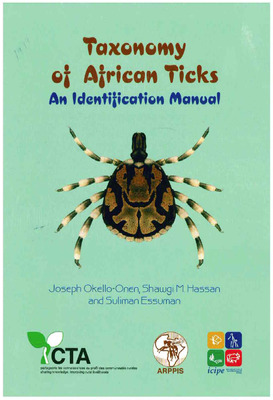
Taxonomy of African Ticks: An Identification Manual
Joseph Okello-Onen, Shawgi M. Hassan, and Suliman Essuman
Pests and vectors are major constraints to the improvement of crop and livestock productivity and health conditions of man in Africa. Research on pests and vectors have been top priority areas at the International Centre of Insect Physiology and Ecology (ICIPE), being addressed under different research programmes, including the Ticks Research Programme.
Ticks are reported to surpass all other arthropods in the number and variety of diseases they transmit to animals and man. There are about 170 species of soft ticks (Argasidae) and 700 species of hard ticks (Ixodidae), the majority of which are found in Africa. Several of these are known to transmit pathogenic organisms such as protozoa, rickettsia, viruses and bacteria to animals and man. The host and disease relationships of ticks and their distribution have been changing due to global changes in climatic conditions, human population pressure on vegetation, unrestricted movement of host animals and associations between domestic and wild animals. These trends underscore the need for accurate tick identification to continuously re-assess the relationships between host, vector and pathogens.
-

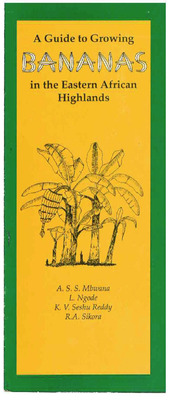
A Guide to Growing Bananas in The Eastern African Highlands
A.S.S. Mbwana, L. Ngode, K. V. Sechu Reddy, and R.A. Sikora
Preface
This Guide to Growing Bananas in the Eastern African Highlands provides basic as well as technical information on planting bananas; general maintenance of established banana fields; management of banana pests and diseases; and care and harvesting of banana bunches. The Guide is dedicated to banana growers, extension officers, agricultural associates and anyone else involved and interested in the production of bananas and plantains.
The Guide is of special interest for growers in the Eastern African highlands, a region of perpetual food shortage, in which bananas are an important cash crop and staple food which can be cultivated for local consumption or for regional and global export. For these farmers, this Guide will be a helpful tool for sound banana production for improving food security and income generation. The Guide encourages the use of an integrated pest management (IPM) approach as a viable alternative to the use of environmentally toxic pesticides.
This publication derives from a joint project between the International Centre of Insect Physiology and Ecology (ICIPE), the University of Bonn and the Agricultural Research Institute in Tanzania. We are grateful for the financial support from the Federal Ministry of Cooperation and Development (BMZ) of Germany through the Germany Agency for Technical Cooperation (GTZ). We would like to thank Annalee Ng’eny-Mengech for providing us with her encouragement and useful suggestions, to Kathy Overholt for the editing and to Newton Mwanga Komeri for the illustrations.
K.V. Seshu Reddy Senior Scientist, ICIPE/BMZ Banana Project
Hans R. Herren Director General, ICIPE
-
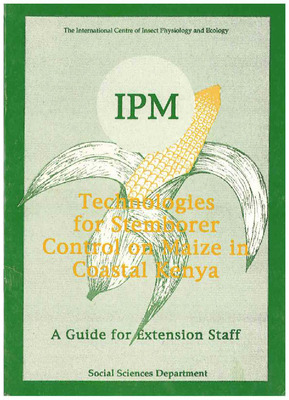
IPM Technologies for Stemborer Control on Maize in Coastal Kenya
International Centre of Insect Physiology and Ecology (icipe)
A Guide for Extension Staff
Introduction
The International Centre of Insect Physiology and Ecology (ICIPE) is a research institution engaged in research on insect pests and vectors of human and livestock diseases. The Centre’s Interactive Socioeconomic Research for Biointensive Pest Management Technology Development (ISERIPM) project, which has been implemented in Kwale and Kilifi districts of Kenya, covers research work on maize, sorghum, cowpea and cassava, which are important food crops in Coast Province. Farmers and frontline extension staff of the Ministry of Agriculture, Livestock Development and Marketing (MOALDM) and staff of KARI have been actively involved in the ISERIPM project’s research activities as collaborating partners.
The project has two main aims which are to: (1) test IPM technologies which have been developed in western Kenya with a view to ensuring their adaptability to local coastal conditions; and (2) develop methodologies of working with farmers, MOALDM’s extension staff, and KARI researchers that can facilitate adoption of IPM technologies and enhance food production on a sustainable basis.
This brochure is a reference source for use primarily by extension staff who are responsible for the demonstration of the IPM technologies to farmers. Most of the information that is presented in this Guide has not only been discussed with farmers and extension staff, but has also been applied by farmers in the research areas during a number of seasons. Indeed, farmers have played an important role in all phases by evaluating the various components of the IPM technology and selecting the options they prefer. For example, out of the original ten maize cultivars and twenty sorghum cultivars tested, two maize and two sorghum cultivars have been selected with the participation of farmers. In the final phases of the project, the farmers were the key players since they managed all the activities of the trials according to the options they selected. The primary role of the researchers in these phases was to monitor the technology adoption proces and to observe and evaluate the modifications being made by farmers.
Printing is not supported at the primary Gallery Thumbnail page. Please first navigate to a specific Image before printing.